Friday, August 10, 2018

Why is it dragons that are everywhere? Part 1

The other day, listening to NPR, I heard the claim made that "almost every culture in the world has a story about dragons." This was followed by brief pondering about why there are stories about dragons in every culture.

Now, if there is one phrase that fills me with debunking urgency, it is "almost every culture in the world." Almost every claim along these lines is only true if you force the rest of the world to be Western. Every culture worships God in their own way, if you pretend that Buddha, coyote, science, and the Way are gods.

The other offense committed by such claims is the narrow definition of "World" usually used. Typically, it mostly covers the 3 continents of the Old World, with Asia represented by Mesopotamia and Africa by Egypt. In other words: Western Civilization and its ancient foundations. Not too infrequently, however, China is thrown into the mix, to represent the remaining 3/4 of the world.

China, of course, brings me back to dragons. If there's one thing fixed in the American consciousness, it's that the Chinese are into dragons. Or, at least, they are into a magical creature whose name we translate into English as "dragon." Allow me to illustrate the similarities between the Western dragon and the Chinese lóng in a table:


DragonLóng
body shapelizardsnake
flies withwingsmagic
breathesfirebreath
natureevilgood fortune
eats maidensyesno
guards treasureyesno
combination of many animalsnoyes
can change into a humannoyes

As you can see, the resemblances are striking, especially in the way they are not there. In fact, there are really only three ways these creatures are alike:
  1. They both have reptilian bits.
  2. They are both big.
  3. They are both called "dragon" in English.
In other words, saying that both Chinese and Western mythology includes dragons is much like saying that both Chinese and Western cooking are based on ground beef, as long as you translate "mĭfàn" as "hamburger."

This suggests an obvious answer to why their are dragons in "all" cultures: because it would be really odd if there weren't stories about reptiles. Except maybe among the Inuit.

I could rest my case there. But what of the rest of the world? In its grossest simplicity, any claims to "all cultures," or even "most cultures," must include a few broadly defined regions:

1) Europe
2) Classical Antiquity (Mesopotamia, Egypt, etc.)
3) South Asia
4) East Asia
5) Central and North America
6) South America
7) Subsaharan Africa
8) Australia and Oceania
These are huge regions covering immense diversity. "Europe" must embrace Celtic, Germanic, Latin, Greek, and Slavic mythologies--and those are much more alike than the Abenaki, Lakota, Navajo, Tlingit, and Inuit of North America, to name just a few. But lets just consider those eight regions. We've already dispensed with 1 and 4. Are there "dragons" in the remaining six?

Continued...

Why Is It Dragons that are everywhere? Part 3

continued
Having crawled the world over (or a minimal selection of it), I am now prepared to pronounce my judgement on dragons:

If you define a dragon as any large creature or being with a serpentine or lizardly bodypart, then it is true that you can find tales of dragons anywhere. Having said so much, you really haven't said much of anything.

If you refine the definition to something more meaningful, the number of dragons drops considerably.

Dragon as Monster

Working definition: A dragon is a serpentine monster, not a divinity, whose role in stories is an adversary to human beings, kidnapping or eating them or their cattle. It may or may not breathe fire.

By this definition, the following qualify as dragons:
  • The Western Dragon
  • Bida of West Africa
One could admit as a "quasi-dragon" the boi-tata of Brazil, but really this is an analog of the will-o-wisp. The function in the story is more important than whether or not the creature has scales, IMO.

This does not approach any sort of cultural universal

Dragon as Divine Adversary

A unique god, goddess, or semi-divine being who is an adversary in stories.

This includes

  • The Hindu Virtra
  • The Mesopotamian Tiamat
  • The Egyptian Apep
  • The Christian Beast
I resisted including the Western dragon on that list, because most of the time it is a monster, or at best a minion of hell, not a unique being. But at times it is associated with the devil, and so is not just an adversary, but The Adversary. Undeniably, the Beast from the Book of Revelations fits into this category.

The category could be stretched to include the Hebrew Leviathan, since there is some talk of God destroying Leviathan, but not really the Midgard Serpent, who is no adversary. Not qualifying also would be South Africa's Monhonye, because he is not divine, and he is overcome through marriage, not battle.

This is an interesting category, but it appears restricted to neighboring cultures, especially since the Christian Beast seems more the heir of Classical roots than the Germanic monsters.

Dragon as Spiritual Being, Non-Adversary

A serpentine being or beings who are divine, semi-divine, or at least spiritual, and do not take on a role as an adversary.

This includes
  • The Chinese lóng and relations across East and Southeast Asia.
  • The Philippine bakuwana.
  • The Aztec Quetzalcoatl and relations among the Mayan.
  • The Incan Amaru.
  • The West African Aida Hwedo and Haitian cousin Ayida Wedo.
This is a broad definition, but it covers enough ground to have at least a bid for universality. If the question of "adversary" were removed (combining this definition with the previous), the case would be even better, hitting all the big cultural areas. However, at this point we've defined dragon as "any partly serpentine creature of partly divine nature, or better," which is so loose it is no longer surprising. Many cultures across the world have "snake" somehow worked into their cosmology. I'm shocked. :|

Dragon as Heraldic Motif

A serpentine being who is use as a symbol of the ruling class, or a symbol of their power.

A surprising category, but one with broad representation that is at least worth some note. It's also the only definition that gets the lóng and the Western dragon both firmly in the club. This definition would include:
  • The Western dragon
  • The Chinese lóng
  • The Mesopotamian Mushussu
  • The Incan Amaru
  • The Aztec Quetzalcoatl
That misses Subsaharan Africa and Oceania, but is otherwise pervasive. It's possible that I missed dragon-king symbols in Oceania and Subsaharan Africa, but by its nature this dragon would be expected to appear only in places with strong imperial governments, especially monument-building governments. That rules out Australia, nearly all of North America, and South America outside of the Andes. The only major monument-building empire that doesn't have a serpentine symbol I know of is India. Oceania, the Zulu, the kingdoms of the Sahel and Niger region, and the Mississippi culture to my knowledge left fewer monuments.

Of course, there are other creatures that are nearly as well represented in the same countries, such as big cats (lion, tiger, and jaguar), eagles, and the overlapping category of hybrid beasts. This observation may explain away some of the excitement at this discovery: most every imperial, monument-building culture used a powerful predator as a symbol of their strength. Hmm. Not so surprising after all.

Why Dragons?

This brings us finally around to my titular question. I cleverly phrased it not "Why are dragons everywhere?" but rather "Why is it dragons that are everywhere." We could run around global mythology and find genus Panthera everywhere, or eagles. We could ask "Why does every culture have gryphons?" and then define as a gryphon any spirit, monster, or god that is a hybrid of animals. We could ask "Why always thunderbirds?" and define thunderbird as any spirit, monster, or god that is partly an eagle or hawk or at least feathered. We could even ask "Why always basilisks?" and assemble the same darn list I just did. But nobody does.

Perhaps it's a linguistic accident. Perhaps early explorers translated lóng as "dragon," based on its serpentine shape, its prevalence in heraldry, its dramatic presentation (clouds and lightning!). This is truly a poor translation, implying a sameness between two radically different creatures, worse than calling a whale a "fish." Once "dragon" was stretched to such an absurd length, it was easy to see them everywhere.

Or perhaps dragons sit on a supreme plane in contemporary mythology. That is to say, they appeal to the contemporary imagination. Perhaps because of the liquidity of their definition. Few dragons appear in contemporary fiction as maiden-eating monsters. Many are befriended or ridden. I think the American mind likes reinventing dragons as less than wicked, if not genuinely good. The outwardly bad, or the misunderstood, the underdog triumphant. But to really understand what put dragons on a pedestal, I think you need look no further than Smaug.

J. R. R. Tolkien's Smaug is far beyond the whimpering lizard in the Rafael's painting of Saint George and the Dragon. Smaug would find Saint George barely a mouthful.
Rafael's dragon
Related image
Tolkien's dragon


Smaug, as Tolkien created him, is so mighty he will banter with a thief in his treasure room, just for the entertainment. What other creature from fiction or mythology can compare with Smaug, the Chiefest and Greatest of Calamities? He set the standard. Oh, the dragon-lóng mixup is older, of course, and that no doubt played a role. But Smaug brought the enormity of dragons into the contemporary mind, I maintain, where we have done enormous violence reinterpreting him with our favorite theories.

Beneath every ridiculous trend, maybe there is something mighty and true. A toast to Smaug!

Wednesday, August 08, 2018

Why is it dragons that are everywhere, Part 2

We left off in Part One with the conclusion that the "dragons" of Europe and China are alike only in the English word used for them. To continue our exploration of the belief in the pervasiveness of dragons, I set off on a search for dragonness in the other major regions of the world..

East and Southeast Asia

Speaking very generally, the ryujin of Japan, the yong of Korea, and the con rong of Vietnam are all very similar to the Chinese lóng. If you consider that the "ryu" of "ryujin" is a Japanese pronunciation of the Chinese character "lóng," you can see that even their names are derived from Chinese.

Let's summarize our two base creatures:
  • a dragon is a monster with fiery breath that guards treasure. In tales it is an adversary and is defeated by a hero.
  • a lóng is a celestial being, a hybrid of a handful of animals. It can sometimes take human form, and in tales it brings fortune and power
So, to give short shrift to a very diverse region that includes three ancient civilizations and more languages than all of Europe, onward...

South Asia

Hindu mythology contains an epic battle between Indra and a giant serpent named Virtra. Virtra stops up all the water in the rivers in India, so Indra kills him. Virta is
  • Like a dragon: an adversary who is defeated by a hero.
  • Like a lóng: takes human form
Virtra introduces some new features of dragonness: he is a singular being. There aren't any other virtras lying around. His battle is cosmological in scale. Saint George saved a village or a kingdom. Indra saved the whole world. Oh, and, direct result of being singular: Virtra is dead. He belongs entirely to the past. These three features take him way out of the realm of either dragons or lóng.

Naga on the other hand, are a race of cobra-like creatures that can at least be compared to dragons.
  • Like a dragon: they may guard treasure. Although they associate with water rather than fire, and have a poisonous bite rather than fiery breath, those are reasonable analogs.
  • Like a lóng: take human form, more celestial being than monster.
I'll need to read more and confirm this, but I don't believe that naga are the leading players in their stories, filling the role of an encounter along the way, or such. But that's just a guess at this point.

Classical Antiquity

Mesopotamia (Iraq) gave us the mighty Tiamat. Her reputation as "Queen of the Dragons" is largely the creation of E. Gary Gygax and the original Dungeons and Dragons game. But in "real life" her role is even more impressive, as wells as a new feature: she helped create the universe.
  • Like a dragon: in some tales could be contrived as an "adversary."
  • Like a lóng: definitely more celestial being than monster. In fact, a better description would be primordial being or even a god.
  • Like Virtra: singular, has an epic battle to lose, and she's dead.
Mesopotamia also gave us mushussu. From what I've found, they are mostly known from iconography, so details are scant. They appear to be a race, but with little in common with dragons. 
  • Like dragon: not much
  • Like a lóng: symbolize power, a hybrid of a few animals, only one of which is a snake.
Egypt gave us Apep, which appears modeled after Tiamat. Apep is a singular primordial being with an epic battle to lose, a little more of an adversary.

Israel gave us Leviathan, who is more akin to the Midgard Serpent of Scandinavian fame than to the dragon. Dragons are big, like whales are big. Leviathan is big, like mountain ranges are big. One source gives its size as being "300 miles," and this would be at a time when "300 miles" could be a month of traveling. We'll call this epic size.
  • Like a dragon: hot breath
  • Like a lóng: more a being of nature rather than good/evil
  • Like Virtra: singular, except that Leviathan is still alive.

Central and North America

It is almost ridiculous to consider this region as a single group. There is a greater difference in the languages from Maine to California than there is from Spain to India. It is also home to three great civilizations, including one of perhaps just three civilizations in the world to invent written language without at least knowing that someone else was doing it. It was not easy to discover dragon-like creatures in American mythology, since it is so often overlooked by those who claim universality. Those who don't, generally don't see dragons in American mythology. But this is what I found:

The Aztecs gave us Quetzalcoatl, a god that is serpentine in shape, except when he takes human form. He is singular but very much present. He symbolizes power, so he seems to resemble the lóng in a number of ways. But I think being a supreme deity does kind of knock one into a different mythological category. Plus, Quetzalcoatl is covered in feathers, so he is the only alleged dragon that does not have scales.

The Mayans gave us Kukulkan and Gukumatz, both of which resemble Quetzalcoatl, as far as I can find.

I'm still hunting for something north of the Rio Grande.

South America

Another broad region. Geographically it includes the tallest mountain range outside of the Himalayas, the largest rainforest on Earth, the driest desert, and the largest (by volume of water) river. The Amazon is so much bigger than other rivers that it would take the eight largest rivers on other continents to equal it. The Madeira dumps more water into the Amazon than the Mississippi, Yellow, and Nile rivers put together can dump into the ocean. But what about dragons?

The Inca gave us the amaru which has some similarities with the lóng. It is a race of spiritual beings, and a hybrid of animals. It occupies places of respect in iconography. I will need to find more mythology about the Amaru, but certainly this is the closest we've come to a cross-cultural analog. It is, however, like the lóng, not the dragon.

The Tupi people of Brazil give us the boi-tata. It is a serpentine monster that lives in a hole in the ground. It does not fly, or breathe fire, but at least its eyes are fiery. This might be a reasonable analog for a dragon, except it has an entirely different role in stories. Rather than marauding through villages, the boi-tata tricks people in lonely places into thinking that its eyes are the lights of someone's campfire. The boi-tata is not a dragon: it is a will-o-wisp.

The Guarani people of Paraguay give us teju jagua. It lives underneath fruit trees, and lives on the fruit. It can be a protector. Sometimes, teju jagua are known to guard treasure, but that's probably their only claim to dragoness.

Subsaharan Africa

Africa, of course, is the second largest continent in the world, and not by a little. The Sahara desert is such a barrier to life, however, that the continent is really split in two. North Africa is oriented toward the Mediterranean, and so becomes part of Classical Antiquity. Egypt fought with Assyria, Carthage with Rome. The Sahel, the Congo, the Kalahari, these are something else entirely. 

So different, in fact, that our first stop looking for a Subsaharan dragon is mostly found in the Caribbean: Ayida Wedo is a singular rain goddess among the African expats of Haiti. She is clearly related to (not just similar to) Aida Hwedo of the Dahomey people in West Africa. Both are known as "rainbow serpent." Aida Hwedo, however, like Tiamat, has a role in the creation of the universe. He also is of epic size, being responsible for holding up the world. Ayida Wedo, on the other hand, lives in the sky. Both are probably more like Tiamat than a lóng, but they are both alive

Also in West Africa, the Ghana people have a story about Bida. Bida was a monster who lived in a well, and would make gold rain down on the people, if they gave him 10 maidens to devour. This sounds rather dragonish, and his role in the story is to be slain by the hero. However, his is a singular tale. Bida is dead, now and you don't have to worry about him. Also, the hero of Bida's tale is the bridegroom of the last sacrifice. The heroes of many Western dragon tales are saints and knights, characters who have their own story cycles. Still, Bida is reasonably close to a dragon.

There appears to be a legend of a dragon in the Congo called Mokele-Mbebe. However, it was seized on in the 20th century by people who thought they could prove it was a living dinosaur, which they thought would somehow disprove evolution. It is therefore well beyond my patience to sift through all the keen debates like, "Is it a sauropod or another kind of dinosaur?" to find out what the actual folktale is. Let this be a cautionary tale: Yes, Virginia, there are stupid questions. Onward...

From the Shangana (Tsonga) people of South Africa we have the Masangi, who lives in a hole in the ground inside his hut. Masangi is a snake, but he is also a healer. His story is that he looks like a monster, but is not. The villagers must overcome their fear of his appearance to get his healing. Like Bida, he is a singular character in a singular tale. He is not a dragon.

Similarly, from Lesotho, we find Monyohe. A little more monstrous than Masangi, he withholds rain and causes a drought. Another singular character in a singular tale, but it's a recognizable archetype. Like Beauty and the Beast, his monstrous appearance is dispelled with the promise of marriage. As my daughter might say, "This tastes like 'not a dragon.'"

Australia and Oceania

Lastly, from the Philippines, we have bakunawa. Bakunawa swallows the moon during an eclipse. So he's a singular divine being who explains natural forces.

Continued.
Thursday, April 20, 2017

Limnandi panel

Here's a peak at an early pair of panels. The first shows the central character/narrator (female) and the eponymous Limnandi (male). The second is just two local girls. The setting is South Africa, sort of, inasmuch as it is anywhere out of dreams, which is where the story was conceived.
If anyone wants to gauge the age level of the story, these are probably the most explicit pictures there will be.

Here are inspirational photos of a Zulu hut and a Zulu village.


Wednesday, April 19, 2017

Graphic Novel

So I went to the Vermont Comic Con the other day, and I tried to get a couple artists to think about wanting to illustrate some graphic stories I've written. They looked at what I'd drawn and told me to draw it myself. So... who am I to argue?

Saturday, December 24, 2016

Eugene Fairfield's Best Books of 2016

As last year, a book is considered "2016" if I read it in 2016. As such, the competition is highly random, pitting P. G. Wodehouse against Lemony Snicket. Here they are:

Best Young Adult


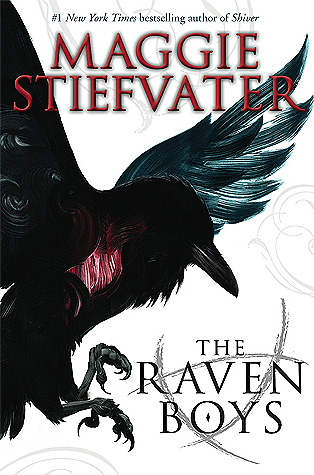
The Raven Cycle, by Maggie Stiefvater

Blue is a compelling heroine, her tension with the Raven Boys is artfully done, the setting is original and surprising, the plot and romance compelling. It's hard to find something not to like about this book.

Best Science Fiction

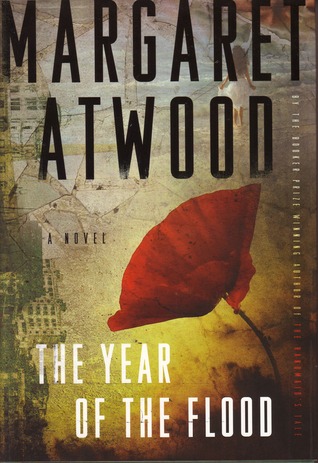
Oryx and Crake (MaddAddam, #1)The Year of the Flood by Margaret AtwoodMaddAddam (MaddAddam, #3)

MaddAdam trilogy, by Margaret Atwood (Oryx and Crake, The Year of the Flood, MaddAddam)

 Lyrical, terrifying, absurd, human, brutal. Margaret Atwood is a stunningly powerful author. The Crakers are wonderful.

Best Fantasy

The Raven Boys by Maggie Stiefvater

The Raven Cycle, by Maggie Stiefvater

I didn't read a lot of fantasy this year, and if not for this series, I wouldn't have given a "Best Fantasy" nod this year.

Most Important

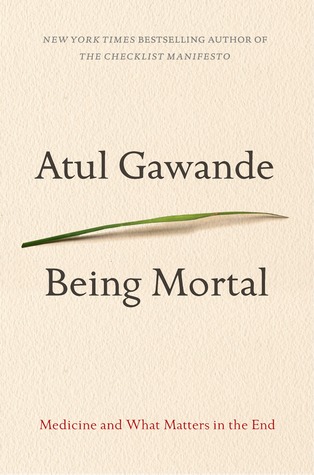
Being Mortal by Atul Gawande

Being Mortal, by Atul Gawande

What is it really like -- aging, infirmity, and dying? Informed by his experiences as a doctor and as the grandson of a dying man in India, Gawande explores issues of independence, pride and loss, traditional vs. modern care, and a medical system that sees death as an enemy to defeat. A peculiar war to fight, with the guarantee that no matter how many battles are won, the war will always be lost. If you know anyone old or infirm, read this book.

Best Discovery

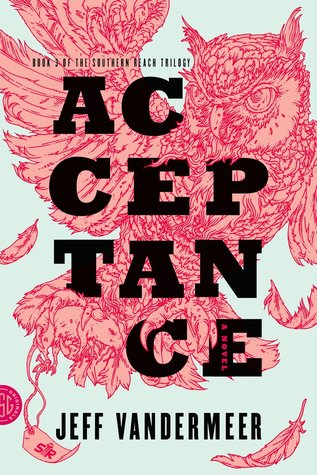
Authority by Jeff VanderMeer Annihilation by Jeff VanderMeer Acceptance by Jeff VanderMeer 

Southern Reach Trilogy, by Jeff Vandermeer

 Last Christmas Isabelle got a book on writing, The Wonderbook, by Jeff Vandermeer. Looking at it, I wanted to know who this writer was. Weird, complex, and original.

Author of the Year

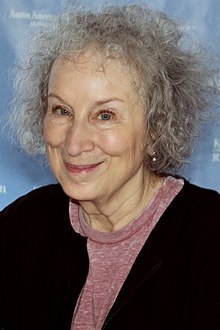
Margaret Atwood 2015.jpg 

Margaret Atwood

Speaking of being mortal, Margaret Atwood is something more. The competition is hardly fair to mere human beings.

Best Author Who Isn't Margaret Atwood

Maggiestiefvater.jpg

Maggie Stiefvater

Seriously. She wrote 5 of the 30 books I read this year, and they ranged from Good to Great.

 Best Solo Audiobook Performance

Will patton 2006.jpg

 Will Patton

Apparently Scholastic sprang the big bucks for the Raven Cycle. This guy has an extensive filmography going back to 1983's Silkwood. Here, he performs the great feat of making you forget there is only one reader. I can't remember his voice, I can only remember Blue, and Gantsey, and the Gray Man.

Best Audiobook Performance in a book I didn't like

Simon Vance (Titus Groan)

I've noticed that the best audio performances usually line up with my favorite books. So here is a fabulous voice actor, despite reading for a book I didn't like. The diversity of characters and voices he is capable of is stunning. Hats off!

Best Protagonist

illustration by ulrikmunther

Blue Sargent (The Raven Cycle by Maggie Stiefvater) Second from right

Born under the kind of prophecy you really don't want ("You will kill your true love with a kiss"), Blue is the only daughter (and only non-psychic) in a house full of psychic women. At once tough and vulnerable, fierce and gentle, the inadequate diner waitress among the elite prep school boys, but also the queen of her band. Not only only that, but she's also super-cool.

Best Quote

"Who is this Fuck, O Toby? Will Fuck come and help us, too?"

MaddAddam, by Margaret Atwood

The day fuck became a deity. Need I say more? 

Book of the Year

MaddAddam (MaddAddam, #3)

MaddAddam, by Margaret Atwood

This is a book that will last generations. Bleak, visionary, at times absurd. It is the hopeful conclusion to a devastating trilogy.


Wednesday, June 15, 2016

Plot Peeves

There are some things I just can't stand in a story.

Plot Fart

A compelling question is raised... and ignored

Ten year-old girl was nipped by a werewolf, but manages to fight off the lycanthropy somehow. Now seventeen, she is attacked by another werewolf, and bitten again. Will lycanthropy overwhelm her this time? Is she doomed, her life as a human ruined? What will happen?

Unfortunately, nothing. None of these possibilities even occurs to the characters, because they have divine knowledge somehow that she is immune to lycanthropy. Being immune is certainly possible, but their absolute certainty that this is how it works just doesn't make sense. It's like a story-wide brain fart.

Stupidity Plot Drive 

An obvious solution could solve the problem, but the characters, by sheer force of will, do not notice.

The young heroes, riding in a coach and four, are stopped by a tree fallen across the road. A second tree blocks their retreat. They try to pull the fallen tree out of the way, but they aren't strong enough. If only there was someone stronger to help them! Like four Clydesdale draft horses! Certainly it's possible the horse couldn't do it, either. But we don't know they couldn't, because no one even thought about the possibility. Although it's a good thing they didn't think to try this, because if they had escaped, they wouldn't have been attacked in the night and the plot advanced.

This is related to the Plot Fart, but worse. After a similar fashion, an obvious question doesn't occur to the characters. In the Plot Fart, the willful oversight is just confusing and annoying. In the Stupidity Plot Drive, it is necessary to  keep the story moving. Nothing is worse than a problem that is only a problem because the characters are too stupid to solve it.

Say What?

Characters briefly do the impossible, leaving the reader wondering if this is supposed to be significant, or what?

Often this happens to me with wildlife. The girl who runs "very fast" and escapes from a mountain lion. The hunters who decide they're going to kill all the wolves in the forest, so they walk into the woods and shoot them. Question: given a 40' head start, how long can an Olympic sprinter stay ahead of a mountain lion before getting caught and eaten? Answer: 0.9 seconds. Question: how far might a wolf pack be from its den when the hunters go looking for it? Answer: up to 30 miles.

I don't like to dispute accuracy with fiction. Just let it be a story. It's okay. But it is so darn jarring. For me it's analogous to having characters in New York jump in their car and drive to Paris for the afternoon. I stop reading and try to figure out if I'm supposed to make anything out of this apparently magical power or not.

In the case of the mountain lion, I actually was--the girl was half a were-lion. If the girl had been shocked or confused by her miraculous escape, I'd have been okay. But because she doesn't notice she's done something superhuman, I'm left wondering if she did, or if the author was just confused. "Very fast" doesn't cover what you'd need to do to outrun a mountain lion. It's the fastest sprinter in the world who can last 0.9 seconds.

In the case of the wolves, no, the hunters have no super-powers, these wolves just like to sit around and wait to be hunted.

Sunday, January 03, 2016

Star Wars: A Simple Comparisom

SPOILER ALERT!

As everyone knows, Star Wars is a trilogy of trilogies. There's the Original Trilogy, from 1977. The New Trilogy, from 2015. And, of course, there's the Abomination, from somewhere in between, I'm trying not to remember.

Everybody knows how the Abomination compares to the Original, but how about OT and NT? I'm trying to make up my mind.

At the risk of making my co-workers laugh at me, I had to make a table.

Original Trilogy New Trilogy
PLUS: Heroic, Epic, Larger-than-life, classic retelling of the Hero's Tale. Deeply rooted in mythology Epic and heroic, but not the classic "Hero's Tale" (hero--Rey--is absent from the beginning of the story)
PLUS: Tight, solid plotting DING: fractured story-telling. Needlessly unresolved questions. Stellar hopscotch so fast the viewer loses track of what is happening where. Rapid-fire coincidental meetings.
DING: Lame, stilted dialogue, mildly whiny hero ("But I wanted to go to the Tashi Station and pick up some power converters!") PLUS: Strong characters, real feelings and situations. Characters drive story. Solid dialogue. A little more life-size.
PLUS: Amazing cinematography PLUS: Amazing, evocative cinematography. Better picture of poverty and oppression.
PLUS: Original, definitive. Star Wars transformed SF for the movies. DING: Death Star Redux III. A lot of parallel scenes.
DING: Cuteness. R2D2 had appeal, the Jawas were slightly creepy, but the teddy bears were over the top. Cuteness contained. BB-8 had it, and that was enough.
Improbable situations and physics, but it's all in good fun. DING: Silly physics. Silly enough to be distracting.

Score: 

For the Original Trilogy, the Heroic Tale, the mythology, and its original, transformative nature are its greatest hallmarks. The dialogue and, especially in later episodes, cuteness factor are its most famous flaws.

For the New Trilogy, the characters, their conflicts and struggles, the vision of the First Order, and the evocative places stand out. It's a shame, therefore, that the frayed plot undermines all this.

Telling the difference between what is a delicious, compelling mystery, and what is an annoying withholding of information can be a tricky call. But there are two simple, basic guidelines:
  1. Unless mystery and subterfuge is the point of the story, if the heroes know the answer, the viewer should know it. 
  2. If a character has a mysterious background, when others discover it, the viewer should discover it. 
In the case of Rey's past, the first point means that, by the end of the movie, we should know something of the circumstances of her abandonment. We shouldn't be guessing whether she was waiting for her mother, boyfriend, sister, best friend, or entire family. We shouldn't wonder whether the parting was forcible abduction, probable death, neglectful abandonment, or heroic abandonment. The memory flashes at the cantina are only a tease, not a resolution. The second rule says that when Rey and Leia meet, it should be clear whether she's thinking "Here is someone who knows what I'm feeling," or if she's squealing "Mommy!"

The ambiguities build on each other. It appears as if Rey is Ren's sister, but that raises more questions. If not, then we know nothing of her background. If so, then why doesn't she know anything about Han and Leia? It's all so completely unresolved that I even lack confidence it's worth trying to unravel. That is to say, I expect that, when the "mystery" is revealed, any evidence against the revealed truth is simply ignored. J. J. Abrams track record with Lost encourages this view.

The parallel scenes I can forgive, because they felt like tributes more than rehashes. If a funny-looking band had featured in the cantina (as in Return of the Jedi's rehash), if there had been a brawl, if the Yoda-ite had used Object-Subject-Verb word order (or some other odd speech), if the Neo-Death Star's weakness wasn't directly tied in to the uniqueness of its original weapon, this would have annoyed me much more. However, no new twist can really make Death Star Redux III okay. We need a new threat.

The silly physics aren't a bad ding, they're just annoying. They disrupt the story for anyone who thinks about what's going on. You don't need a Ph.D. in physics to wonder how a planet can survive after its sun has been sucked up by the Neo-Death Star, we learned in kindergarten how we need the sun. Anytime your viewers are scratching their heads and saying "Wait, what just happened?" you've interrupted your movie. It's bad story-telling.

The Winner: The Original Trilogy

It's a close call, and a shame, because it wouldn't have taken more than a junior story editor to fix the flaws that undercut the new movie. All the genius of the characters, dialogue, settings, and plot was badly hampered by the shoddy storytelling. Simplify the planet-hopping, make clear what is happening where. Pay attention to the questions you raise, and notice the difference between a mystery and an annoying omission. That part isn't hard. It boggles my brain that Hollywood so often skips the critical, easy parts while creating brilliant bits to flounder in the soup.

The New Trilogy is fabulous, and I am eagerly awaiting the next two episodes. I even have hope that Disney will ask JJ Abrams to remake the Abomination episodes, since they own the rights, have no shame about admitting what a disaster they were, and will make tons of money and happy fans if they do. But this movie doesn't displace the original from its iconic top spot.

At least, not yet.

Sunday, December 20, 2015

Eugene Fairfield's Best Books of 2015

As last year, a book is considered "2015" if I read it in 2015. As such, the competition is highly random, pitting Adam Rex against Jerome K. Jerome. Here they are:

Best Children's Book: 

The True Meaning of Smekday by Adam Rex

(See below for the many reasons this won)


Best Science Fiction:


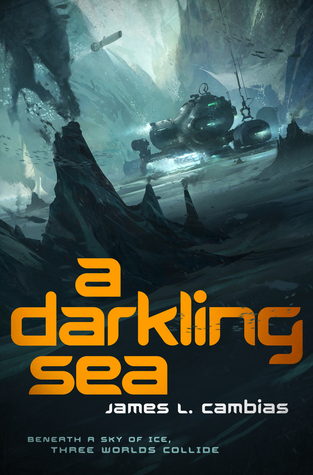
A Darkling Sea by James L. Cambias

Excellent depiction of First Contact, with all the cultural misunderstanding, a compelling alien world, and dramatic plot.

Best Epic Fantasy:

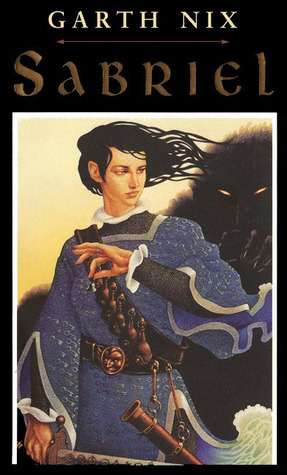
Sabriel by Garth Nix

Original, at once epic and human-scale, with a compelling heroine, well-developed and original magic system, dramatic climax, and flawless submersion in the culture.

Runner-up: Queen of the Tearling by Erika Johanssen

Queen Kelsey pulls along this tale of a teen who must assume her throne through multiple assassination plots, with a compulsion to justice that drives her to make dangerous choices.

Best Political Theme in Story Form: 


12 Years a Slave by Solomon Northrup

Plainly and powerfully told. Should be required reading in high school.

Runners-up: (tie) The Doubt Factory by Paolo Bacigalupi & The True Meaning of Smekday by Adam Rex

Bacigalupi's no-holds-barred indictment of the corporate spin machine is powerful and timely, but Rex's allegory of the Euro-american conquest of North America is more subtle and less preachy.

Funniest Book: 

(tie) The True Meaning of Smekday by Adam Rex

 and Three Men in a Boat by Jerome K. Jerome

 How can you rank one over the other? Both hilarious and brilliantly written, yet so completely different in tone and, well, everything. On the one hand, there are eternally quotable lines from Rex: "I was told to come to the obnoxiously-colored building where people who are bad at math give away their money" "'Do you know why we've pulled you over, Miss?' 'Uh... because I'm only twelve and my car is floating?'"  On the other you've got the pinnacle of British humor.

Most Heart-Wrenching: 

(tie) Landline by Rainbow Rowell

and The True Meaning of Smekday by Adam Rex

Rainbow Rowell is a powerhouse of real life, flawed characters, and heart-wrenching scenes. But it is hard to beat the poignancy of Adam Rex's Tip, trying to drag her mother to the doctor, or standing in the snow on Christmas Eve, staring at the place where her mother was just sucked up by an alien ship.

Most Haunting: 


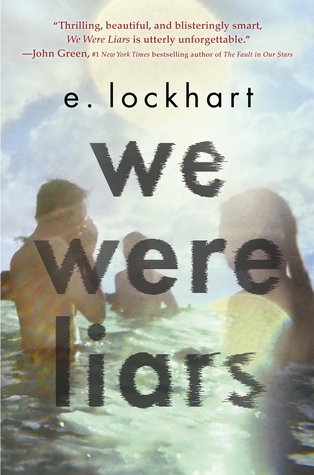
We Were Liars by E. Lockheart

A powerfully told story of PTSD, family drama, wealth, and, of course, lies.

Best Sequel: 

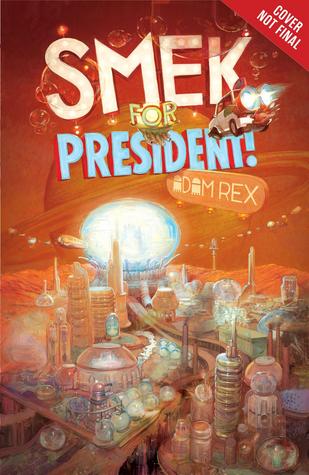
Smek for President by Adam Rex

Nearly as good as the original. Expands and builds on the previous while staying true to the story.

Continued -->


Eugene Fairfield's Best Books of 2015, continued

Most Magical: 


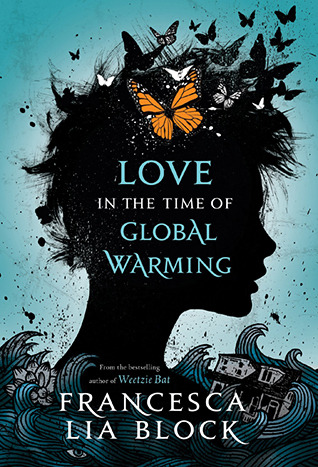
Love in the Time of Global Warming by Francesca Lia Block

Bleak and beautiful. Suffused with awe and wonder.

Best Scientific Grounding: 


Dark Orbit by Carolyn Ives Gilman

This tale of a sightless people combines the most recent neuroscience and a keen sense of culture to create great science fiction.

Best Magical System: 


Sabriel by Garth Nix

Simple yet fully developed, original, evocative, and wholly self-consistent. What more could a fantasist ask?

Best Protagonist: 


Gratuity Tucci (True Meaning of Smekday)

Smart, sassy, bold, introspective, literate, and still needs her mommy. She's  one heck of an African-Italian-American 12 year-old. 

PS. Do you know how hard it is to find an image from a book after Hollywood has made a movie out of it?

Best Villain: 

(tie) the captain (Challenger Deep) (no image available)

He's crazy. He's cruel. He's incomprehensible. And he hates that parrot.

the Gorg (True Meaning of Smekday)

All Gorg are left-handed. All Gorg like musical theater. If you were to take all the Gorg in the world, and stack them one on top of the other, the Gorg would kill you. Those who do not cooperate will be severely punched.

Best Audio Performance: 


(tie) Michael Curran-Dorsano (Challenger Deep by Neal Shusterman)

Every character comes alive, you forget there is only one man reading. Total immersion in the book.

Bahni Turpin (True Meaning of Smekday by Adam Rex)

Not only was her Gratuity Tucci fantastic and heartfelt, but her J-Lo was definitive. The perfect voice for the alien that was at once meek, out-of-it, and yet superior to human foolishness. She'd have first place all to herself, if I could have shaken the image that the residents of Roswell were black. This could be subconscious racism--I doubt if I would be as bothered if a white reader didn't make black characters sound black--although of course some black people do sound white, while rednecks never sound black. It probably wouldn't have mattered as much to me in another context, but race mattered in this story, and in this scene the fact that the characters were white mattered, so the accent distracted me.  But, mm, (sheep noise--bubble rap--bubble rap), maybe, her J-Lo was the amazing. [that's an inside joke if you haven't read it]

Author of the Year:

Paolo Bacigalupi (The Doubt Factory, The Water Knife)

He writes for young adult, he writes for adult. He explores the future of climate change in dramatic, intelligent stories. He is bold enough to smear dozens of major corporations, accusing them of real criminal activity around real events (such as the warnings of Reyes Syndrome on aspirin, that Bayer fought to suppress or delay). He vividly displays the horror of modern warlords. And he hasn't dropped the ball once.

Runner-up: Adam Rex (The True Meaning of Smekday, Smek for President, and Fat Vampire)

The author of the Smekday toure de force ought to be the hands-down winner. But his Fat Vampire didn't hold a candle to his masterpiece. So I gave top honors to the man who never disappointed. Still. If Adam Rex never writes a good book again, he belongs in the hall of fame.

Book of the Year:


The True Meaning of Smekday by Adam Rex

What else could it be? What other book can place in Funniest, Most Heart-Wrenching, and Best Political Theme? When I read this at the beginning of the year, I predicted no book would top it. I was right. I further predict it will be among the best books of the decade. If it can stand the test of time, which it may, it has a shot at placing among the best children's books of all time.

NOTE: Unless it is cold and raining and you need a campfire lit or freeze to death, do not ask me what I thought of the Hollywood movie using characters with the same names, a rough similarity to a few plot structures, and some quotes (I would not stoop to call it an "adaptation"). I will flame.

Brief Reflection

It bears noting that I get most of my literature these days (Sabriel excepted) through  audio books, and further that the best stories coincidentally have the best narrators. The opposite also tends to be true, as I disliked the narrator of Invasion of the Tearling, a disappointing sequel. Despite reading the books (very nearly) word-for-word, I think audio books are a distinct art form. It becomes impossible to separate the performance from the story. A talented reader can elevate a book high above others that might be its peers in written form. Conversely, A poor reader can ruin a book of any quality. It is rare, but I have encountered audiobooks that were simply unlistenable. It makes me wonder how I would view these stories on the page, Still, no skill in narration can push a poor story into the ranks of the great.

Tuesday, September 01, 2015

Carolyn Ives Gilman and Me

I just started listening to Carolyn Ives Gilman's Dark Orbit. I was immediately struck how her set up parallels the SF saga I've been working on for years: Mischief's World (working title). Both stories feature a female protagonist with a science background in alien life who has a reputation for holding authority and official conventions at arms length. Both protagonists are compelled by a difficult circumstance, skillfully exploited, to accept a job. Both jobs put her on a journey to an unknown alien world, and both alien worlds were discovered by a message from an ancient exploratory vehicle that people had given up expecting to hear from. Both alien worlds also give a previously unseen look at alien life--the first-ever non-terrestrial life in Gilman's, the first compatible with terrestrial life (i.e. human) in mine.


The parallels end there. Dark Orbit goes off into mysterious deaths and fractal space, Mischief into mysterious passengers, a romance, power and domination, and [SPOILER DELETED]. But that's an awful lot of overlap. Although Mischief might be more light-hearted and temperamental than Gilman's Sara, they would certainly be friends if they met.

I met Carolyn once, at Readercon, years ago. I'd had the great privilege to have her read one of my short stories and offer insightful feedback, and I was pleased she remembered it some months later. At that point, Halfway Human was her only title, and she wasn't accustomed to strangers looking up at her and saying, "Oh, Carolyn's here!" At that point in time, I only had one completed novel manuscript, and, curiously, like Halfway Human it was a "Gender SF" story. Hers shook up gender roles by creating a world where exists a third, neuter gender, mine by reversing the power dynamic by eliminating 90% of the male population (on a continuing basis).  The parallel would be truly astonishing if Mischief's World were my current project, but I confess it is stalled. It has an epic scale akin to The Fellowship of the Unloved, and epic scale means an epic undertaking for me.

When I tried to look her up online, I discovered that Carolyn's better-paying job is Historian, and my paycheck is for teaching High School Social Studies (and other subjects, but that's my favorite). I've always felt a kinship with Carolyn. A little envy, too, of course. But I like it that she sent a little of the spirit of Mischief O'Malley out into the published world. She was feeling a little cramped, stuck on my hard drive all these years. I hope we will meet again some day. I wonder how she would react if she got to see the opening for my story.

Thursday, September 12, 2013

The Infancy of the Heron: from Honky to Indian

The original cast of the story looked a lot like the role-playing game it had come from. There was a fighter (Sister Dagmar), a wizard (Bjornsterne), a cleric (Qoyor Sube), and a thief (Hjalmar). ASIDE: If you're not familiar with role-playing culture, this "thief" is more like Bilbo Baggin's burglar, a clever and sneaky helper of the party, than a criminal. The only character who didn't really fit as a roleplayer was Rabbit. Very few role-playing systems have a character class of "peacemaker."

Part of the inspiration for Rabbit was actually Butch Cassidy. I was watching one of those "Movies with Commentary" shows in Boston ("The Movie Loft," if that means anything to anyone). The commentator remarked that Cassidy was neither the cleverest, nor the toughest, nor the best gun in the gang. Why did people follow him? "Because they liked him." Interesting, I thought. The hero who is the leader simply for his relationships with people, without force, title, or cunning.

I wrote an entire draft of the novel with the wizard and the honky Rabbit, before I realized that was wrong. I axed the wizard, ultimately, because he was too standard. I've always had trouble with the role-playing convention of having both wizards and priests, both casting spells but drawing on different power. How can there be gods who shaped the order of the universe, and a power in the universe that is other than what the gods shaped. Magic and religion have to be integrated, I've always thought.

In historical examples, this is always the case. Magic and the sacred are never separate realms. Granted, in medieval Europe, witches and priests were co-existent and separate. But they both drew on the same divine power. When a priest performed a miracle, it was the power of God. When a witch cast a spell, it was the power of Satan.

So how did Rabbit finally become a part of a tribal people? I think I knew he ought to be before he did. When I finally agreed that he needed to, I had to square my shoulders and take a deep breath. I'd been afraid to do it. I didn't want to be accused of co-opting Indian culture, or making a poor-Indian story, or anything of that nature. But then I realized that what I was doing instead was writing a story about white Indians, and that was worse. So... I had to do it right.

After some years of struggling with this story, and bringing it nearly into its final form, it occurred to me that maybe I shouldn't have made up a fake society. It is based in fair part on Indians of the North-east, the Iroquois Confederacy and the Abenaki, but mostly it was my invention. I deliberately did not have the children of Uliante grow corn, because that, it seemed to me, would literally brand the tribe Native American. But I was always uncomfortable that the Children of Uliante, and all their kin, were hunter-gatherers before the coming of the lowlanders, rather than the farmers of the Americas, with their own domesticated crops.

Similarly around this time, it occurred to me that I had created the Old Tongue largely by messing with Japanese as a model, although I added many non-Japanese phonemes, and maybe I should instead have worked off of Abenaki. I'd used Japanese for convenience: I know it. I experimented with Abenaki, and I even rewrote the first chapter with the new language.

Ebidzani of Uliante lay still on his pallet in the cool summer night, quieting his nerves. His night terrors came frequently these days, it was unfair to disturb his family... When he was a child little older that his grandson Zegleuna was now, there had only been a vision of flames and a feel of heat on his face and an overwhelming sense of loss. Later he had known it for a funeral pyre, later still for the pyre of his wife, W'bala. Recently, he had seen the faces of the people gathered around the pyre, seen his chief, Zokatese, strangely without his sword, his daughter Ditsala, utterly bereft, his friend Nazante wide-eyed in sorrow. He had never seen his son W'sigwa, he didn’t know why. This time he had clearly seen his grandchildren, Zegleuna and little Inasa, though he had always thought they were present.
Only W'bala, as always, W'bala, did not see it as his shame but his strength. "Se w'dô, your soul walks in fears others cannot face even in their dreams, w'dô ho? If ever you can face your dreams, se, you will be the wisest of us all."
 But finally I realized that if I used the Abenaki language, I would have to use more clearly the Abenaki culture, and that meant the Abenaki cosmology, and that meant the story fell apart. So the Indianifaction of Rabbit remained as I had made it, and that would be good.

Saturday, August 24, 2013

The Birth of the Heron

Now that The Heron in His Vigilance has finally hit the shelves, I thought I could write a bit about where it came from.

The seed of the story was a role-playing game. The old-fashioned kind, a bunch of friends sitting around a table with paper, dice, books, and beer. The players were the folks listed in the dedication. Mallgeir was in the names, as was King Balás, and Qutuchin, Uliante, and Celio, although the names were different. The basic plot, the struggle against Balás, was the same. The attack on Norcincó, the escape through the tunnels, and the murder of the Heir of Jan was there--although the Heir of Jan was male and the Temple of the Dust did not exist.

It was a great way to develop a story, interacting with other people, drawing from other creativity. I conceived the idea of making the story in 1998, flying from Burlington to Los Angeles for the Writers of the Future Award ceremony. You spend a lot of time in the air, between Vermont and California. That was in the days when Babylon 5 was on the air, and the notion of a television serial story (as opposed to a series of stories) was novel in America. It occurred to me that I could adapt the game into a TV serial, so I wrote up a treatment, a list of episodes, describing the development of the story.

Some changes occurred immediately. The invention of Rabbit as the central character, the addition of Sister Dagmar and Bjornsterne. The player's characters quickly transformed.The only character who is recognizable is Deb Hayes's K'Shan, who became Qoyor Sube. The backstory and the nature of her power are original to the book, but K'Shan was a shaman of the Bayan Govi.

Two non-human characters are largely gone: Tony Galbraith's Beast and Carrie Rouillard's Ithiel. Coincidentally, both are visual artists: you can find Tony's paintings and wool sculptures at www.DoAnArt.com, and Carrie's masks at SansSouciStudios.com. Beast was adopted out of another novel, so I couldn't use him. Ithiel, a unicorn, survived into the TV show, but when I decided to do the novel, I decided to drop her. A unicorn is a powerful archetype. It seemed impossible to have a story with a unicorn in it without the unicorn and the nature of unicorns being central. I replaced them with Tlikkipit, who was part of the TV show all the way through.

Also, as the story evolved, it became much more humanocentric. All manner of magical creatures, trolls, man-eating bird people, banshee birds, and others were dropped. Not to mention the issue that Marion Zimmer Bradley's estate, which wouldn't have objected to her banshee birds being pulled wholesale out of her books for a role-playing adventure, would have had something to say about a published novel.

Amy Freund's Ghost lasted through the entire story in the TV version. When I wrote the novel, however, I got as far as Skowe before realizing he didn't have a role, anymore. Not coincidentally, this is when I realized Tlikkipit could not always be there. It was then left behind by the old trick of spirit creatures not crossing water.

Jeremy Freund's Ben Barak survived in Bjornsterne. Ben Barak was a Leane Si from a far northern people which I later dropped. Obviously I couldn't have another Leane Si just banging around with the party, so that had to go. But Bjornsterne's character came a lot from Ben Barak, particularly the speechifying, although I don't believe Ben was quite as obtuse as Bjornsterne.

But there was still a long way to go. For instance... the people of Uliante, and Rabbit himself... were all white.

Friday, February 01, 2013

Is a Bison not a Buffalo?

AHEM. Scientists are not the arbiters of language.

In North America, there is an indigenous animal usually called the buffalo, which is not related to the Asian and African buffalo. Therefore scientists insist on calling the NA buffalo "bison." Good for them.

Curiously, I hear much less complaint about how in North America people call elk "moose," and then call a completely different animal an elk which is not an elk but a deer.

Meanwhile, a killer whale is not a member of a whale family. It's a dolphin. Neither the sparrowhawk (falcon) or redtailed hawk (buteo) are hawks. The jackrabbit is a hare and the snowshoe hare is a rabbit.

Despite getting an enormous kick out of taxonomy, and the difference between Artiodactyla and Perrissodactyla, I use all these "wrong" names. By and large, the common name is a much more evocative name than the "correct" one. "Bison" is a species. A buffalo is the animal that thundered in great herds over the plains, the lifeblood of the Sioux, the animal the pale-face shot by the hundreds for sport as their trains rattled by. A buffalo is the spirit of the American west.

In the 19th century, we like to say, people thought whales were fish. Listening to Moby Dick, it occurred to me, that is completely wrong. People called whales "fish." They defined a "fish" as an animal that swims in the ocean, and by that definition, they were absolutely correct, a whale is a fish. It simply isn't true that they mistakenly believed whales to be fish. They understood that there were significant differences between whales and fish, like breathing air. But the medium of life in water made such demands upon creatures that the whale is, in many ways, more like a marlin or swordfish than it is like a buffalo (sorry, a bison). What happened was that the definition of what makes a fish changed, so that it no longer included whales.

Apparently, by the same standard we now use to exclude whales from the name of "fish," sharks are not fish either. Sharks are in a different order from fish, they are no closer relations than are whales. But I've never heard anyone protest that a shark is not a fish.

The notion of whales as distinct from fish is now so firmly fixed in the modern mind (and, yes, the distinction is a very good one), I don't call whales fish. But I no longer feel a need to wince listening to some old sea shanty about "chasing the whale-fish."

Current Projects

I've been away from here so long. Many apologies. What am I doing? A lot. Most current bits:

The Cracked Earth: (Working Title) A bit ago I tried the "share your story with your daughter chapter-by-chapter while you write it." Kept me on my toes to be sure each chapter made you want the next. This is an odd Middle-Grades story about  a handful of kids who haven't been eaten by the creatures who've eaten most of the people on Earth. The first draft is done.

A Time Traveler's Guide to Messing Up Your Life: (Firm Title) A Young Adult story about a high school girl who time travels, and tries to "adjust" history toward better outcomes. I thought it was all done, when I discovered Steven King had just published a story about time travelers trying to save Kennedy, so now I have to change the climax so it doesn't look like I copied him. I think I might have her go after J. Edgar Hoover instead, which will have the advantage of my hero having to fend off advances from the POTUS.

Inka Argus: (working title). A middle-grades story about a girl reporter in large and strange city similar to 1900. To be a mystery, which I haven't really done before, so we'll see. This is in early stages.

Friday, June 08, 2012

Ray Bradbury and I, an Odd Tribute

I am weird about Ray Bradbury. I don't think there is any author I love so much that I don't really read.

Okay, I do read Bradbury. I've read Farenheit 451, and the Martian Chronicles, and Something Wicked This Way Comes twice (except for the two chapters that is the old man expounding on the nature of love, which I could only read once. GOWTSS [Get On With the Story, Silly]). I've read a few stories of Dandelion Wine and From the Dust Returned and a couple others. Well, I suppose you could call that reading a lot, but I guess it's what I haven't read that makes the point. Quite apart from the 583 other short stories he's written, I have had I Sing The Body Electric on my shelf for almost twenty years, and never read more than a page. It's the 2/3 of Dandelion Wine and From the Dust Returned that I never got to. There is no other author I like so much who has so much unread book on my shelf.

Bradbury is one of the last of his generation -- if not the last. And he's always had a special place for me. Heinlein, Asimov, and Bradbury were always on another plane of existence from other writers. Heinlein was gone when I was a kid, Asimov left us some years ago, now Bradbury is gone, too.

Bradbury was different. He was the lyrical side. Where Heinlein was adventure, and Asimov science, Bradbury was poetry. I actually read my first Bradbury stories in elementary school. One was actually in the text, third or fourth grade, a story about the wonder of a new pair of sneakers. I didn't know it was Ray Bradbury until I read Dandelion Wine in college and -- heh! I know this story! I had the same experience with a story of a vampire family that I found in a beat up old paperback lying around the house. I think I was in fifth grade. I really like the book, it seemed a more sophisticated collection of "monster stories" than I was used to. That one I didn't find again until more than twenty years had passed, and it was the same experience, meeting an old friend again.

To say that I admire Ray Bradbury is an understatement. His stories just hang with me. I've never had that rediscovery experience with any other writer. I think Farenheit 451 was, in some ways, more prophetic than the more famous dystopias from Orwell and Huxley. The Martian Chronicles was haunting. Something Wicked This Way Comes taps into some strange reservoirs of fear and awe. These are no merely good books.

When I was working on my high fantasy novel, I had a real hard time with the first chapter, "The White Arrow." I knew what happened. But how could I tell it, how could I open it. And then for some reason I thought of Bradbury, and his voice, and I wrote "The awakening from nightmare begins with the realization that it must happen." The story I told is drawn from my own life, from falling asleep on a couch at work, and realizing I was asleep, and finding myself paralyzed and unable to do anything to wake myself except breathe. The experience was mine, but still on my hard drive the final version of that chapter is named "Ray Bradburys White Arrow.doc."

So why don't I read the rest of those books? I don't know. They don't draw me back. But if you compare that to the other unread books on my shelf, you can see the difference. I never finished Children of Dune. I got bored, put it down, and never even wanted to come back, to that or other Frank Herbert books (well, maybe I'll reread the original Dune). I have a fair bit of unread Ursula LeGuin, who was once my favorite author. My tastes changed, and now she is too overtly "making a point." GOWTSS. Bradbury is different. Even though the stories lost me, I am still in awe of them. Probably the closest to Bradbury is Candas Jane Dorsey, whose Black Wine I never finished, despite loving the beginning and still feeling awe of the great things she did. Maybe the real problem is books with "Wine" in the title.

Thanks, Ray. I'll miss you.

Saturday, April 30, 2011

Reality Rocks

Reality is much more complicated than my imagination.

Character runs away. She goes to the station, gets on a bus or train, and goes.

For the heck of it, I checked out the schedule, just to compare fares, and find out if there actually was a train that could do it.

There was... but the train doesn't leave until the next morning, she'd have to spend the night in the station. The bus requires three transfers, New York, Richmond, Texas, and would take four days. Long, miserable ride. --But she can't spend the night in the train station, she'd get caught. She'll have to board the red-eye bus to New York, get over to Penn Station at 2AM and then hang out until 6am when the train leaves.

A little look at reality complicates the story, gives lots of fun stuff to happen.

Tuesday, April 05, 2011

Nibble nibble little publisher

So, one publisher is looking at the manuscript for The Fellowship of the Unloved.

Another is looking at the outline for Mischief's World.

Mischief's World is the title I've finally settled on for my space colony story. I think it's going to be a series! The initial volume--the story of the journey out, and the corporation that wants to break my free-spirited heroine, and the enigmatic broken man she seems to be falling for--might actually be approaching completion. I'm at the "read through the story again and see if it's holding together" phase.

Here's a link to my initial post on this story, only 3 years ago!

It's a solid tale. I don't want to jinx myself, but after 12 years of struggling, I may complete 2 novels in 12 months.

Saturday, November 20, 2010

Queasy

I just sent a pitch on my novel to a publisher. I've been ready to do this since August, but afraid. It's done, now. No taking it back.

I think I'll stay sitting down for a little bit.

Wednesday, September 29, 2010

Global Warming and Stories

I had this idea about a post-global-warming story in which New York City has turned into a apocalyptic Venice...

But you know, watching those videos and doing the math on sea level rises, it won't be that much of the city underwater. Sure, it will be terrible in human cost, but in the land of stories it won't look like a radical change.

Then it occurred to me: sea levels won't rise like the water-level in the sink with the faucet dripping. They'll rise along with catastrophic increase in storms, which will destroy barrier islands which will increase storm damage... the rising sea itself may not cover New York, but in the process, New York might get undercut and sink below the waves...

I'm thinking a kind of East-Coast Vash The Stampede.